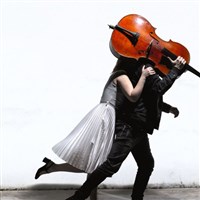
Orchestre National d'Île-de-France: Tragic Loves

Orchestre National d'Île-de-France: Tragic Loves
To bookDescription
War and peace with Emmanuelle Bertrand, artist in residence.<p> <strong>Johannes Brahms</strong><br> Tragic Overture, Op. 81</p><p> <strong>Edward Elgar</strong><br> Cello Concerto in E minor, Op. 85</p><p> <strong>Sergei Prokofiev</strong><br> Romeo and Juliet<br><br> <em>The "weeping" Overture</em><br> This is how Johannes Brahms described this seamless orchestral score, which rivets you to your seat from its very first chords and holds you spellbound until the final moments. Composed in 1880, this score is the counterpart to the Academic Festival Overture (1881), "which laughs," according to Brahms. While the latter is solemn, tragic, and labyrinthine, it also conceals within its heart more dance-like and joyful passages. A diverse overture that is also a sublime introduction to the art of Brahms.</p><p> <em>A concerto in the aftermath of the war</em><br> The return to life after illness and war. This is how one can understand one of Edward Elgar's most popular works. A virtuoso score he composed after a period of artistic drought linked to the First World War, it further cemented his place as the foremost English composer of the last century. Premiered with great fanfare on October 26, 1919, in London, this last major work by Edward Elgar was another step towards the Holy Grail of British musicians: the position of Master of the King's Music, which Edward Elgar attained in 1924.</p><p> <em>The most beautiful love story in the history of music</em><br> "Two houses, both equal in dignity (In fair Verona where we set the scene) For old grudges tear each other apart again." These lines inaugurate one of the most beautiful love stories ever written: William Shakespeare's tragedy Romeo and Juliet (1597). Three and a half centuries later, in 1936, Sergei Prokofiev gave us his own dazzling interpretation of the lovers of Verona, a wordless ballet composed of a myriad of dances and iconic themes, such as the relentless Dance of the Knights (popularized by a famous perfume advertisement), Friar Laurence, and the death of Tybalt—a whirlwind of fantasy from which one never fully recovers!</p>